

Evolving Google Analytics: More Insightful Measurement
Preparations have been underway to ready Google Analytics 4 for the future. Two years ago, it was announced that Google Analytics 4 would serve as the official solution of record. Since that time, investments have focused on delivering AI-powered insights and creating tighter integrations with Google Ads, allowing platforms to generate more value at a faster pace.
Customer actions serve as the primary engine for business results, appearing in the form of email sign-ups, purchases, and other relevant interactions. To clarify comparison metrics across systems, an update is rolling out to align conversion definitions across Google Ads and Analytics, building a unified view of your Google advertising performance.
The New Standard: Google is introducing “key events” in Google Analytics to replace traditional behavioral analytics conversions, ensuring that conversion metrics align perfectly between Google Ads and Google Analytics reports.
Key Takeaways
Aligning Performance Tracking Across Platforms
By unifying the reporting environment, site and app managers can easily track core behaviors to update their product features and customer experiences. The incoming alignment rebrands historical conversions in the report and explore tools as key events. This transition allows companies to define vital customer behaviors in Analytics, identifying successful actions to optimize performance.
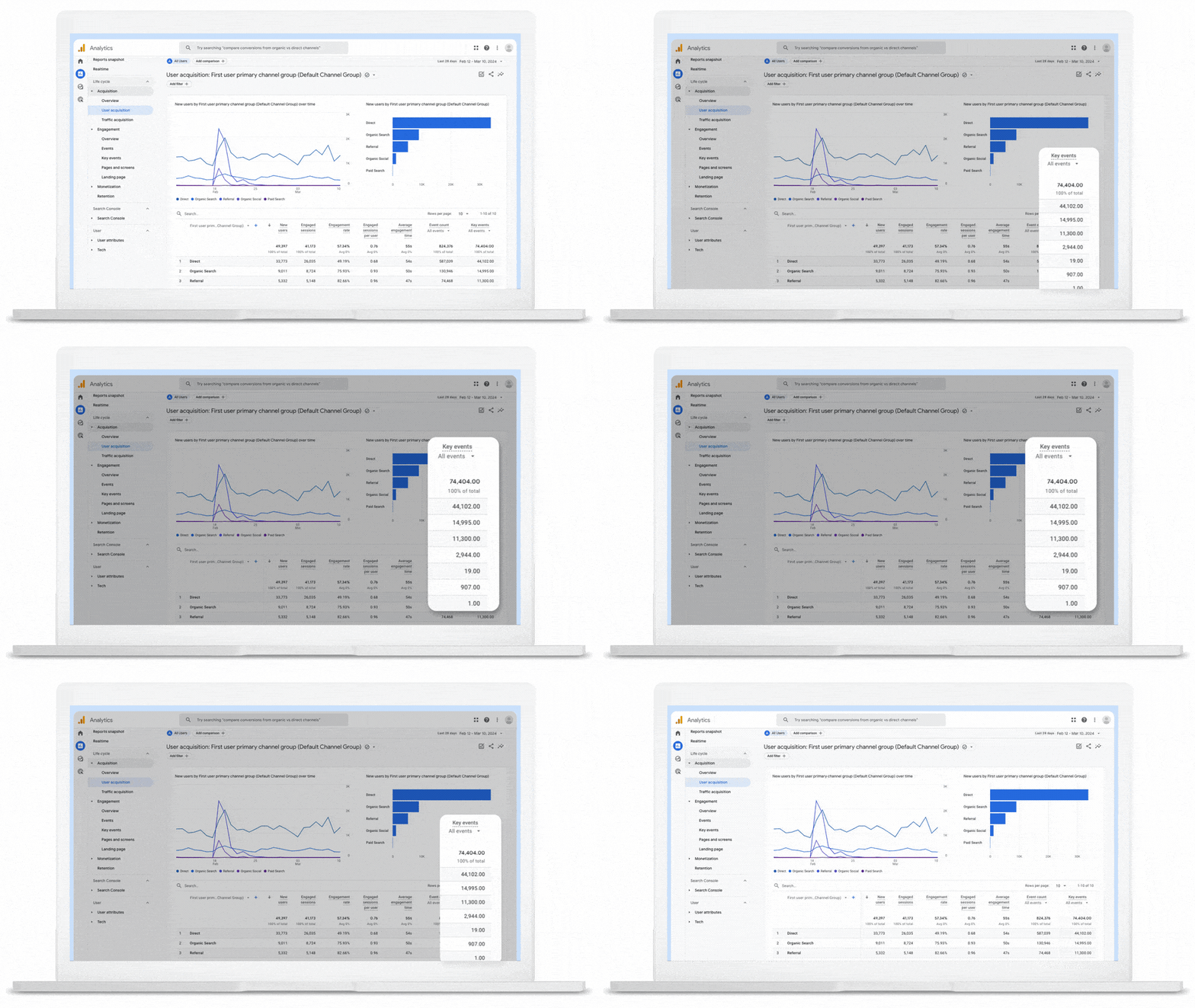
For managers holding linked Google Ads and Analytics properties, matching conversion tracking data will now surface in the Advertising Workspace. These insights can form the basis of live campaign optimizations. Advertisers will also benefit from comprehensive cross-channel conversion reporting that extends well beyond Google’s own network spaces.
Looking ahead, the advertising section is slated to host upcoming features, including specialized tools and additional conversion reports. Paired with recent adjustments made to the structure of the advertising workspace, these features aim to supply clean performance transparency right where it serves your business most.
Measurement Strategies Structured Around User Privacy
Establishing a reliable tracking foundation is key to adapting to a landscape focused on user confidentiality. Google Analytics 4 is engineered to navigate this space using updated reporting features and insights that maintain campaign visibility.
Support for the Protected Audience API, a component of the Chrome Privacy Sandbox, is scheduled to deploy within the next few weeks. This inclusion ensures you can continue connecting with specific audiences even in an environment without third-party cookies.
Furthermore, functional capabilities have been extended for enhanced conversions in GA4. This process utilizes consented, hashed first-party customer information to build upon traditional tracking tags, resulting in a truer perspective of business performance. Marketers can now transmit enhanced conversion metrics from GA4 directly to Google Ads, simplifying setup pipelines.
The introduction of Consent Mode also simplifies the step of communicating user privacy selections to Analytics. Assisted by AI-driven behavioral modeling, these components combine to generate a complete view of the user journey, ensuring business utility while honoring visitor privacy choices.
FAQs — Analytics & Measurement Updates