

Agentic Commerce Arrives: How UCP and AI Are Reshaping Google Shopping
At the recent Google I/O, the vision for the future of “agentic commerce” was officially unveiled. This new era of online shopping is anchored by three major developments: the Universal Cart, the Agent Payments Protocol (AP2), and the foundational Universal Commerce Protocol (UCP).
Co-developed to democratize agentic commerce for businesses of all sizes, UCP is now taking a massive step forward. Google is actively bringing enhanced UCP features directly to its platforms while simultaneously launching advanced AI tools to help merchants navigate and succeed in this new landscape.
Key Takeaways
Introducing New UCP-Powered Features Across Google
The newly introduced Universal Cart is a genuinely intelligent shopping cart designed to work seamlessly across various retailers and Google services, including Search and Gemini. UCP removes the traditional friction of online shopping by streamlining the checkout process once a consumer is ready to buy.
Consumers can execute their purchases with Google Pay in mere taps for many popular brands, or they can choose to transfer their cart items directly to the merchant’s website to finalize the transaction. Very soon, shoppers will be able to utilize these select checkout features across major retailers such as Nike, Sephora, Target, Ulta Beauty, Walmart, and Wayfair, as well as with Shopify merchants like Fenty and Steve Madden. Crucially, no matter which checkout path the shopper takes, the retailer retains their position as the merchant of record.
Scaling and Expanding UCP Integrations
To scale agentic commerce effectively, it must be accessible to more people in more formats. Therefore, Google is beginning to inject the power of UCP directly into advertising campaigns. Shortly, when brands integrated with UCP run exclusive promotions through Direct Offers or display Shopping ads on YouTube via product feeds on Demand Gen campaigns, consumers will have the ability to purchase on the spot.
Furthermore, shoppers seeking financial flexibility will gain access to “buy now and pay later” solutions, with new integrations from Affirm and Klarna embedded directly within Google Pay.
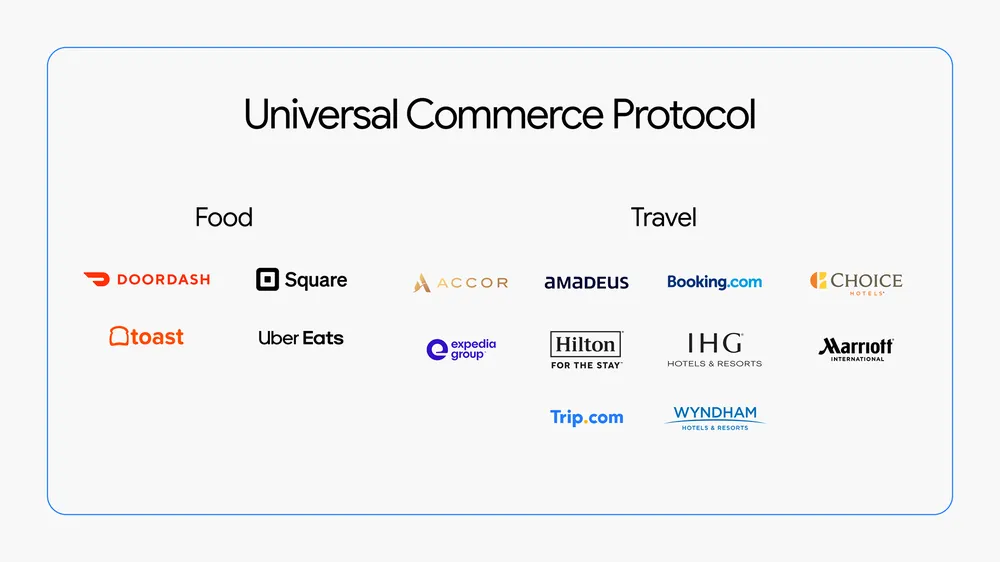
This momentum is not confined to the U.S.; it is expanding globally and moving into entirely new industries. UCP-powered checkout is scheduled to roll out across Canada and Australia in the coming months, with the U.K. to follow. Partnerships with industry leaders are also bringing the protocol to fresh categories like hotel booking and local food delivery. Soon, users will be able to effortlessly book a hotel directly from AI Mode in Search or order food delivery via a conversation in Google Maps.
Helping Shoppers Discover Your Business in the AI Era
With consumers increasingly utilizing AI Mode and Gemini for their daily shopping needs, new insights and tools are being introduced to help brands connect and get discovered. A new AI performance insights tool within Merchant Center provides a transparent view of how a brand is performing across AI surfaces by comparing its share of voice against similar competitors. This tool will be rolling out in Australia, Canada, India, New Zealand, and the U.S. over the coming months.
In the AI era, robust product descriptions are essential for discovery. Retailers globally can now leverage conversational attributes to update their descriptions, mirroring the more conversational tone of modern search queries. Agentic capabilities are also being integrated directly into retailer tools, such as Ask Advisor—a new AI collaborator located in Merchant Center. Scheduled to launch soon, Ask Advisor will provide insights tailored to specific business goals, execute tasks, and connect data across Google Ads and Google Analytics, allowing for effortless management of listings and campaigns.
The ultimate goal is to foster an agentic commerce ecosystem where both consumers and businesses thrive. Connecting shoppers directly with businesses remains the primary objective, continuing to guide retail innovation in the agentic era.
FAQs — Navigating Google’s Retail AI Updates